Limitless Labs: Investing in the future of Industrial Manufacturing
Right now, most people picture AI as something that lives on a screen. A chatbot, a coding assistant, a tool that organizes your inbox. That work matters. But the opportunity for AI beyond the language and organization-centric focus is enormous. The physical world, the one made of metal, parts, and precision that touches all things manufactured is on deck to benefit from the AI revolution.
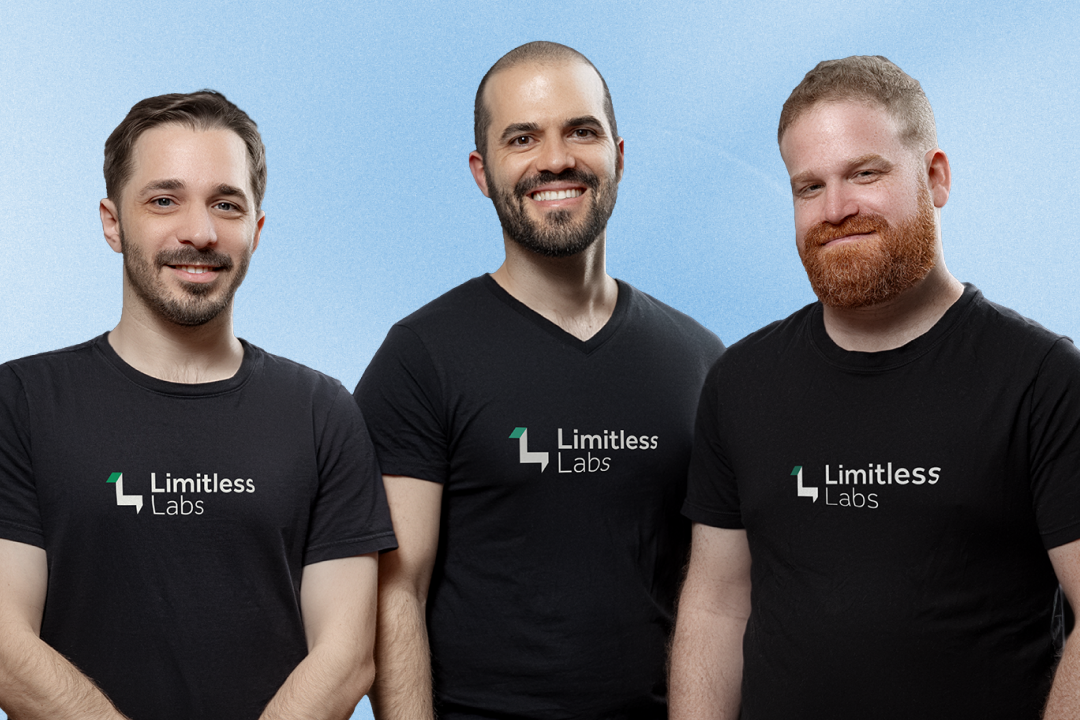
Today, I'm proud to share that Dell Technologies Capital co-led the $20 million Series A in Limitless Labs, alongside Square Peg. We believe this is the team that’s building the defining platform for AI in manufacturing.
Manufacturing’s Tech & Talent Challenge
The phone you're reading this on, the blender in your kitchen, the ring on your finger, the parts inside a rocket headed to space. Nearly every physical object in your life manufactured in the last 60 years was shaped by CNC, or Computer Numerical Control, manufacturing.
An integral part of the manufacturing process, CNC is a multi-phased approach to iterative design and manufacturing production. An engineer creates a design in a CAD (Computer-Aided Design) system. That blueprint gets translated into machine instructions by a CAM (Computer-Aided Manufacturing)platform. Then a CNC machine cuts, drills, and shapes raw material into a finished part.
It sounds clean on paper. In reality, it's anything but. The process cycles between design, modeling, prototyping, and manufacturing, often many times over. Each loop costs time, money, and raw material. And, every step leans heavily on human expertise.
The Physical Engineering Talent Crisis
The skilled professionals who build these parts, the machinists, industrial designers, and CNC engineers, are in critically short supply. As many as 1.9 million manufacturing jobs could go unfilled by 2033 according to a joint report by the Manufacturing Institute and Deloitte. Attracting andretaining skilled talent has ranked among manufacturers' top business challenges over the past decade.
During diligence for this investment, the youngest CNCengineer we interviewed was over 50. In diligence calls for dev-first startups,that number is sometimes half that.
As engineering talent shifted toward software, the pool of new and experienced CNC professionals shrank and that challenge continues.
The result is a manual, slow, and expensive process. So why hasn't AI solved this yet?
Why This Problem Has Been So Hard
In the world of conventional software, progress feeds on shared data. Open source repositories, public code, reusable libraries that can be called and adapted. Large language models trained on all of it. So now, thereare the various coding assistants that make some aspects of software development an almost plug-and-play experience.
The physical world works nothing like that.
CNC code is proprietary to each company. The way one manufacturer works differs from the next, from one vertical to another, fromone device to another. There's no public dataset to ingest, no shortcut to a foundation model. The data that would unlock real progress sits locked inside the manufacturers who produce these components.
To build something robust here, you have understand the domains (literally as varied as analog watches to space station components) inside and out. You have to create models that can think like a top-tier CNC engineer, weighing global and local constraints, accounting for an almost limitless set of parameters, and turning all of it into something a machine can run with in the manufacturing process.
Meet Limitless Labs
Limitless Labs is building the world's first agentic physical AI platform for CAD/CAM in manufacturing. At its core is a Physical AI Foundation Model trained on the physics of metal cutting, CAD geometry, and the real constraints of physical machines.
Think of it as a deeply specialized engineer that works inside the CAD/CAM systems manufacturers already use, including Mastercam, Siemens NX, and PTC Creo. Given a CAD file, the company's CAM Agent identifies features, recommends tools, sequences operations, generates tool paths, and helps produce a shop-floor-ready program. The impact is concrete: CNC programming time can be cut by up to 50%.
There's a second, future benefit that I find just as compelling: models that are capable of learning first from a company's most experienced engineers, absorbing their style and standards. Institutional knowledge that’s been lost to retirement or attrition is preserved for subsequne cohorts of engineers. Tribal knowledge that used to walk out the door now scalesacross every new part and every new hire.
This isn't theory. Since emerging from stealth, LimitlessLabs has moved from pilots to full production deployments with companiesspanning aerospace, defense, motorsports, and industrial machinery. The platform is ITAR-compliant and deployable on AWS GovCloud, meeting thestrictest requirements in the most regulated environments. From rocketcomponents to Formula One parts, where a single part is bespoke and accuracy iseverything, this is precision work at the highest level.
The Bigger Thesis
Limitless Labs represents the next wave of enterprise AI,moving beyond digital workflows and into the physical world of Precisionmanufacturing. The opportunity goes far beyond productivity and efficiency.Faster cycles mean fewer iterations. Fewer iterations mean less wasted materialand lower cost. Done well, it could reshape the economics of an entireindustry, and maybe even make this field exciting to a new generation again.
So far, the biggest gains from AI have been on the otherside of a screen or in agent-to-agent conversations. The next frontier sits atthe intersection of software and the physical world, the place whereintelligence finally touches the things we build, hold, and depend on everyday.
That's the future Limitless Labs is building. We're proud toback them on the way.
Learn more about Limitless Labs at www.limitless-labs.ai.

.png)