DTC's AI Infra Innovation Summit: The AI Stack is a Systems Problem
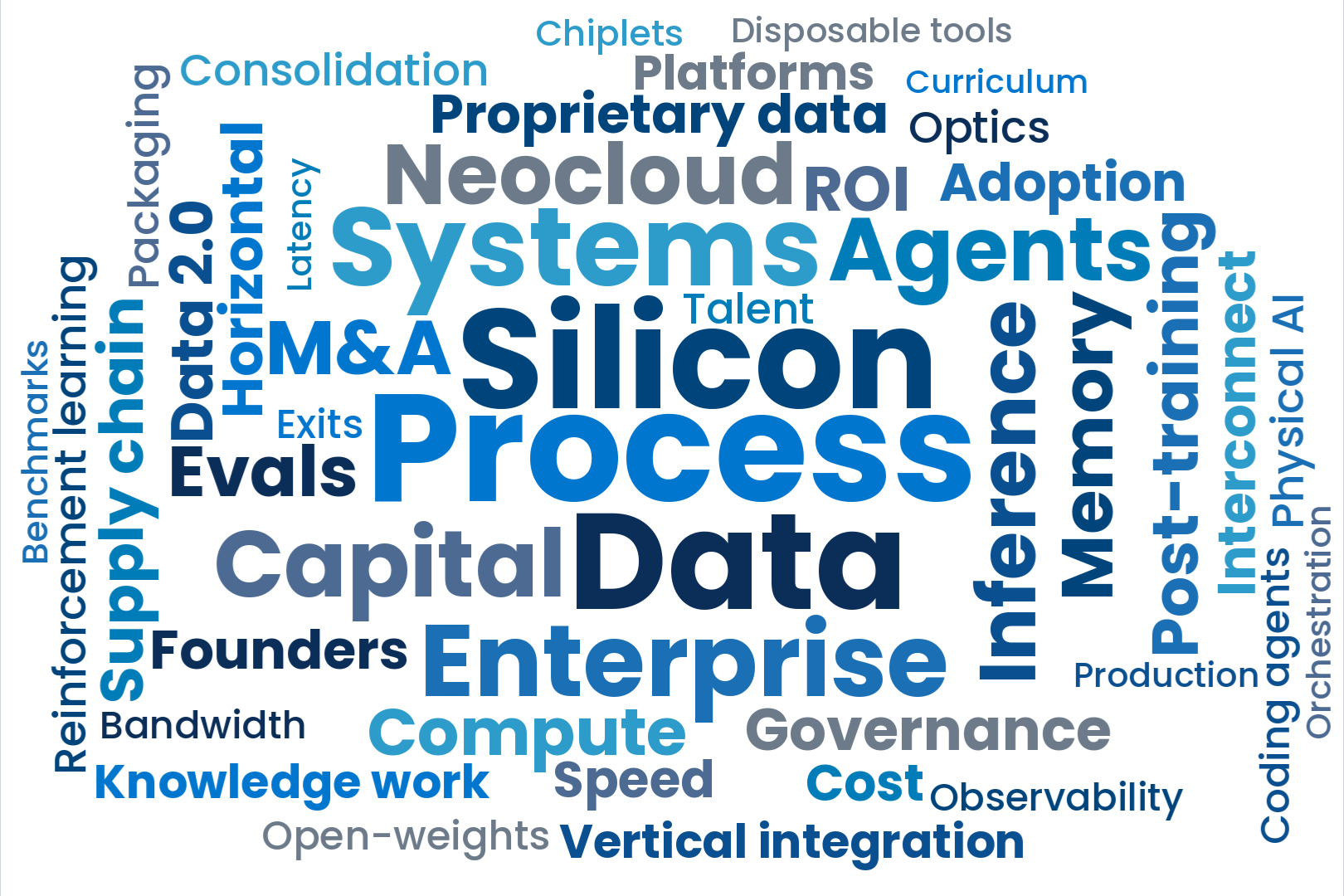
Last week, we brought together 60 founders, operators, and investors for our first ever AI Infra Innovation Summit. The room leaned toward silicon, neocloud, and data founders, the people building the layers underneath every AI headline. Across fireside chats and a conversation, one theme kept returning: AI is no longer a model story. It is a systems story, a data story, and a process story.
Here is what we took away.
Silicon: hardware is cool again because it is hard again
The bottlenecks now span interconnect, bandwidth, latency, memory, packaging, chiplets, and co-packaged optics. This is about systems, not single chips, and the difficulty of making every layer work together is where room for new companies opens up.
Three implications for founders:
- Plan supply early. Memory and other critical components require planning two to three years out. Winning customers first and sorting out supply later will not work.
- Don't mistake scarcity for advantage. The current crunch makes almost everyone look like a winner. It won't last, and durable companies will have genuinely disruptive technology.
- Expect vertical integration, with a high bar. Hyperscalers and frontier labs moving into silicon need rack-level systems expertise, not just chip design, and distribution matters more than before.
On the demand side, speakers agreed this is not 2000 all over again. Financing and build-outs will have ups and downs, and it’s possible that not every neocloud will survive. But, deployment is faster than incumbents can manage and customers are signing real contracts.
Data: welcome to Data 2.0
If silicon is the engine, data is the fuel, and the fuel is changing. Pre-training absorbed the internet. Crowd-sourced labeling added simple, high-volume feedback. Now the work is expert-level post-training and reinforcement learning, closer to designing a curriculum as a research problem. Data spend is measured in the billions.
- Coding isn't saturated. Each marginal gain is so valuable that spend keeps rising, and the frontier is shifting from writing code to software engineering: open-ended tasks judged on architecture, taste, and design, not just unit tests.
- Evals are a bottleneck. The answer to benchmark-maxxing is more benchmarks that are harder to overfit, and labs increasingly pair public indexes with private, roadmap-specific objectives.
- Speed and cost now rival intelligence. Once several models can solve a task, buyers choose on speed, cost, and availability, which favors flexible stacks of open-weights models, dedicated GPUs, and serverless providers.
Asked for the biggest bottleneck of 2027, panelists named capital, data, and evals. As models commoditize, well-curated proprietary data becomes the differentiator, and enterprises will start protecting it.
Enterprise adoption: just getting started.
The enterprise adoption headline: AI is about process. Nothing more, nothing less. The enterprises seeing returns start by understanding how work actually gets done and tie every project to a measurable business outcome, not a mandate to "do AI." Layering AI on a broken process just automates the problem. Clean, governed, proprietary data matters for the same reason, echoing the Data 2.0 theme above.
Buyers are also favoring flexible stacks, can treat individual tools as replaceable, and expect production in weeks, not years. This is creating even greener fields for startups vis a vis incumbents. Adoption will still be uneven: software vendors move first, groups with existing data science teams follow, and most enterprises will need service providers. Founders should consider building horizontal solutions because sophisticated buyers increasingly see agents as general-purpose: they become specialized through the skills and data an enterprise gives them, not through a domain-specific tech stack. The openings sit across that layer, in areas like agent observability, orchestration across multiple coding tools, and process re-engineering for AI.
Capital and M&A: the exit window is open
Capital came up repeatedly as a constraint, and it shaped the M&A discussion. Strategic appetite for AI deals is at an all-time high, and for many buyers, "buy" has replaced "build." Talent now sits outside large organizations, so acquisitions are how incumbents bring it in. Buyers extend well beyond big tech to neoclouds, software companies, and incumbents in healthcare, consumer, industrials, and financials, and public investors have been supportive even at very high valuations.
The message to founders: start thinking about exits now, and talk to your board.
The common thread
Silicon is a systems challenge that rewards planning and depth. Data is moving from volume to expertise, and protecting it is how you differentiate. Enterprises will adopt AI at scale, but only those that fix their processes and data first will see the return. Founders who understand all three layers will be best positioned for what comes next.
Thank you to everyone who joined us, and to our co-hosts at Goldman Sachs for helping make the day possible.